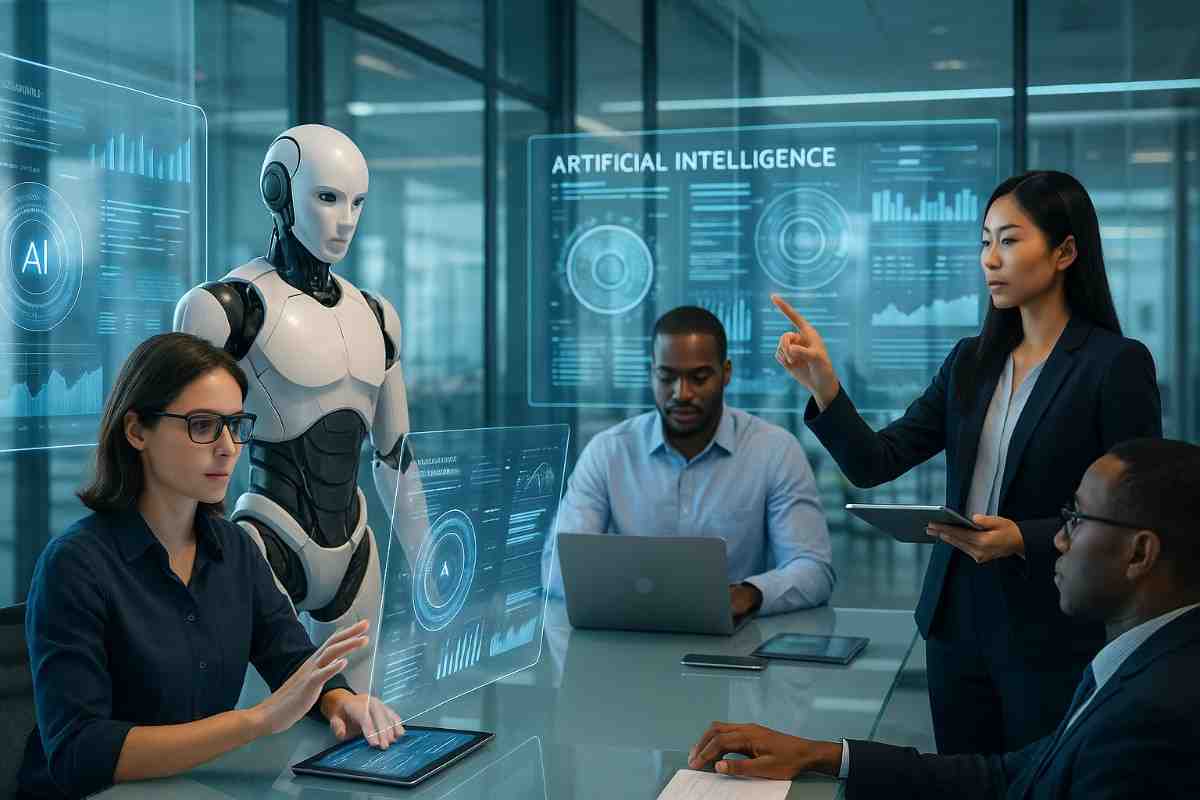
The future of work is unfolding before our eyes. Every major technological advancement—from artificial intelligence to automation, robotics, and digital collaboration tools—is reshaping how we work, where we work, and the very definition of “work” itself. As we move deeper into the 21st century, technology is no longer just enhancing productivity; it is fundamentally transforming industries, skills, and human roles.
Below is a deep exploration of how technology is influencing the future of work and what it means for professionals, businesses, and society.
1. Automation and AI: Redefining Job Roles
Automation and artificial intelligence are now core drivers of workplace transformation. Routine, repetitive tasks—whether in manufacturing, data entry, accounting, or customer service—are increasingly handled by machines. But despite popular fears, AI is not just replacing jobs; it is augmenting human capabilities.
What AI Is Changing:
- Rapid data analysis and decision-making
- Predictive maintenance in industries
- Personalized customer experiences
- Streamlined workflows and reduced human error
What Humans Still Lead In:
- Creativity
- Emotional intelligence
- Complex problem-solving
- Strategy and innovation
Rather than eliminating work, AI is pushing humans toward more meaningful, high-value tasks.
2. Remote and Hybrid Work: The New Normal
The rise of digital tools has made location irrelevant for millions of workers. High-speed internet, cloud-based platforms, digital whiteboards, and video conferencing have created a new era of remote and hybrid work.
Key Trends:
- Employees value flexibility more than ever
- Companies are hiring global talent instead of local-only pools
- Work–life balance and reduced commuting shape productivity
- Offices are evolving into collaboration hubs rather than daily workspaces
Remote work is not a temporary shift—it is the future foundation of many industries.
3. Skill Evolution: Lifelong Learning Becomes Mandatory
As technology evolves, skills must evolve with it. The future of work demands continuous upskilling and reskilling.
High-demand future skills include:
- Digital literacy
- Data analysis
- AI and automation oversight
- Cybersecurity
- Creative problem-solving
- Team collaboration in digital environments
The ability to learn quickly is becoming more important than what you already know.
4. Robotics and Human–Machine Collaboration
Robots are moving from industrial plants into logistics, healthcare, agriculture, hospitality, and more. But rather than replacing workers, the next big phase is collaborative robots (cobots)—machines that work side-by-side with humans.
Cobots help with:
- Heavy lifting
- Precision tasks
- Hazardous work environments
- High-speed repetitive motions
This partnership increases efficiency and reduces workplace injuries, creating safer and more productive environments.
5. Ethical and Social Implications
As digitally advanced workplaces grow, important questions arise about ethics, fairness, and responsibility.
Major concerns include:
- Bias in AI decision-making
- Data privacy
- Job displacement in certain sectors
- Digital inequality between regions
Technology must evolve with thoughtful policies, inclusive design, and transparent governance.
6. The Future: A Human-Centered Technological Workplace
The future of work isn’t a battle between humans and technology—it is a collaboration. Technology will handle the routine, predictable, and highly analytical. Humans will focus on creativity, empathy, ideas, and innovation.
A workplace where machines empower people—not replace them—is the ultimate destination.