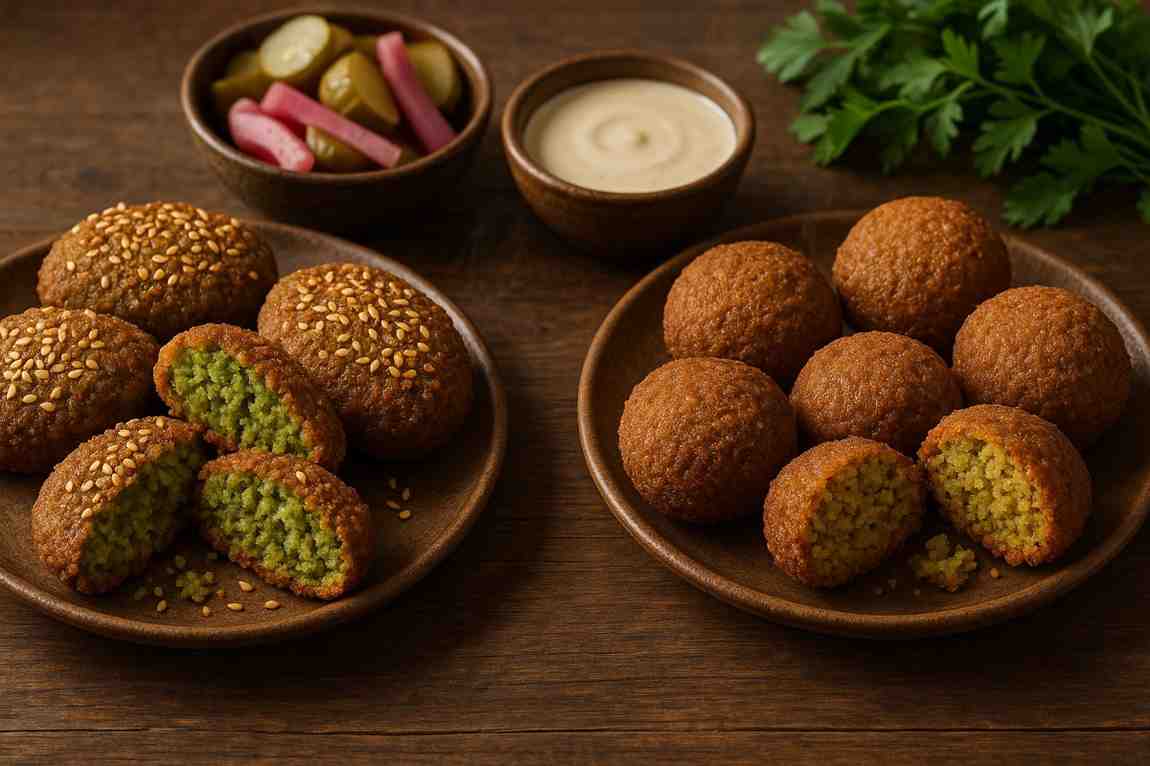
Falafel is one of the Middle East’s most beloved foods—crispy, herb-packed, and irresistibly satisfying. But did you know that not all falafel is the same? Two of its most popular forms, Egyptian Ta’ameya and Levantine falafel, share the same soul but differ beautifully in flavor, texture, ingredients, and cultural identity.
Ta’ameya: Egypt’s Green Jewel
In Egypt, falafel is known as Ta’ameya, and it stands apart the moment you see its deep emerald-green interior. Its origins trace back to ancient Egyptian cuisine, where legumes and herbs were dietary staples.
What Makes Ta’ameya Unique?
- Made with fava beans, not chickpeas: Ta’ameya uses soaked fava beans as the base, giving it a moist interior and lighter flavor.
- Herb-forward, intensely green: Parsley, cilantro, dill, and green onions create its signature color and aroma.
- Crisp outside, soft inside: It is delicate, airy, and fresh-tasting.
- Sesame-coated tradition: Many Egyptians roll Ta’ameya in sesame seeds before frying for added crunch.
Flavor Profile:
Fresh • herbal • aromatic • lightly creamy • delicate
Levantine Falafel: The Golden, Nutty Classic
From Lebanon to Jordan, Palestine to Syria, Levantine falafel is the version most of the world recognizes. It boasts a golden-brown crust and a satisfyingly firm bite.
What Makes Levantine Falafel Special?
- Chickpeas are the star: Primarily made with chickpeas for a hearty, nutty flavor.
- Bold spices: Includes cumin, coriander, garlic, onion, and sometimes chili.
- Firmer, crunchier texture: A structured interior perfect for stuffing into sandwiches.
- Round ball shape: Unlike Ta’ameya patties, Levantine falafel is often round.
Flavor Profile:
Nutty • earthy • savory • crunchy • spiced
Which Is Better?
Neither—because both are masterpieces in their own right. If you prefer herbal and soft, Ta’ameya will steal your heart. If you like nutty and crunchy, Levantine falafel delivers every time.
Together, they showcase the beauty of Middle Eastern culinary diversity, proving how one idea can evolve into delicious regional expressions.