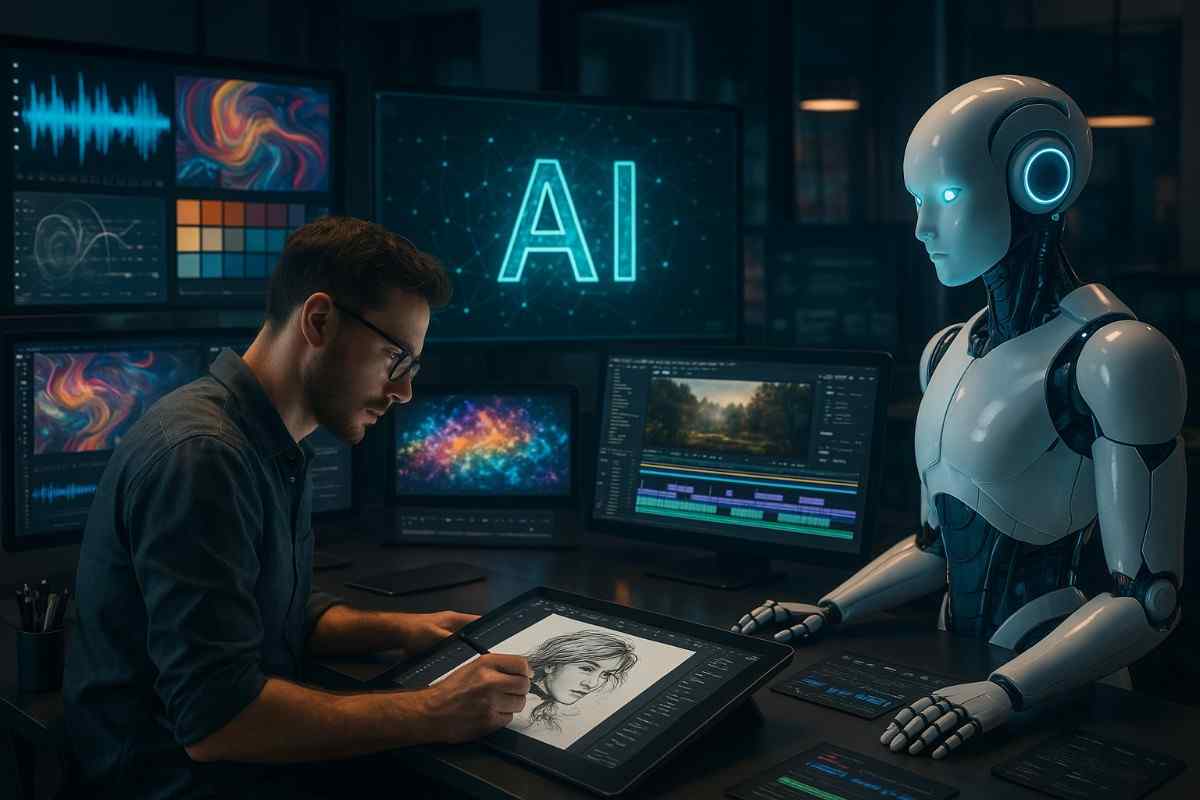
The creative world—once thought to be the last domain untouched by automation—is undergoing one of the most transformative shifts of the digital age. Artificial intelligence, long associated with data processing and analytical tasks, has evolved into a powerful creative partner, reshaping industries ranging from design to film, advertising, music, gaming, and beyond.
Rather than replacing human creativity, AI is expanding it, providing tools that amplify imagination, streamline workflows, and unlock new artistic possibilities. Here’s how AI is revolutionizing the creative landscape.
1. AI as a Creative Collaborator, Not a Replacement
Creativity is often described as uniquely human—rooted in emotion, intuition, and lived experiences. AI cannot replicate this essence, but it can enhance it.
How AI Collaborates With Creators
- Suggests variations and ideas designers may not have considered
- Helps artists prototype concepts faster
- Assists writers by generating drafts, themes, or alternative story directions
- Supports musicians in composing beats, harmonies, and soundscapes
- Provides filmmakers with AI-driven editing, color grading, and visual effects
AI acts like a creative assistant that never sleeps: fast, multifaceted, and endlessly adaptable.
2. Transforming Visual Arts and Design
AI tools have exploded in popularity among digital artists, photographers, and designers.
Key Innovations
- AI image generation for concept art and mood boards
- Style transfer to reimagine artworks
- Automated retouching and enhancement
- Instant color palette exploration
- 3D model generation and environment design
Designers can now create in minutes what once took days, freeing their time for deeper artistic decisions.
3. Revolutionizing Film and Media Production
In filmmaking and entertainment, AI is quietly becoming a behind-the-scenes powerhouse.
Applications in Film & Media
- Automated video editing and transitions
- AI-powered CGI and VFX enhancements
- Storyboarding and script assistance
- De-aging effects and character animation
- Enhanced dubbing and voice generation
The result? Lower production costs, faster workflows, and more opportunities to tell ambitious stories.
4. AI in Music and Audio: A New Creative Frontier
Music creators are embracing AI as a tool for inspiration and experimentation.
What AI Brings to Music
- Generating melody ideas
- Producing beats and full instrumental tracks
- Mastering and audio cleanup
- Custom sound design for games and films
- Adaptive music that changes with user interaction
For musicians, AI is less about replacement and more about unlocking new sonic universes.
5. Advertising and Marketing: Faster, Smarter Storytelling
AI is reshaping how brands understand and communicate with audiences.
Impact Areas
- Personalized ad campaigns
- Automated copywriting and slogan creation
- Visual ad mockups in seconds
- Predictive analytics for content performance
- AI-generated video ads and animations
This allows marketers to experiment faster, target smarter, and craft narratives that resonate more deeply.
6. Ethical Considerations and the Human Role
With rapid advancement comes important questions:
- Who owns AI-generated content?
- How much AI involvement should be disclosed?
- How do we protect original artists from misuse?
- What does authenticity mean in an AI-driven world?
The future of creative AI must be built on transparency, fairness, and respect for human artistry.
The Future: Hybrid Creativity
The next era will not pit humans against machines—it will merge human imagination with machine intelligence. Artists, writers, designers, and creators will continue to lead with vision, emotion, and originality, while AI handles the heavy lifting, repetitive tasks, and exploration of infinite creative possibilities.
AI doesn’t diminish creativity—it evolves it.